
Avoiding Fake Job Listings Online: A Complete Guide to Finding Safe and Genuine Career Opportunities
The internet has transformed the way people search for employment. Today, job seekers can apply for positions across different industries, locations, and organizations with just a few clicks. Online recruitment platforms, company career pages, professional networking websites, and digital job portals have made employment opportunities more accessible than ever before. However, alongside these advantages, fraudulent job advertisements have also become increasingly common. Understanding Avoiding Fake Job Listings Online has become an essential skill for students, fresh graduates, experienced professionals, and anyone seeking legitimate employment in today’s digital environment.
Fake job listings are designed to deceive applicants by pretending to represent genuine employers. Some fraudulent advertisements aim to collect personal information, while others attempt to obtain money through fake registration fees, training charges, documentation expenses, or equipment purchases. In more serious situations, job seekers may unknowingly share sensitive financial information or identity documents with criminals posing as recruiters. These scams can result in financial loss, identity theft, emotional stress, and lost career opportunities.
The growing importance of Avoiding Fake Job Listings Online reflects the increasing sophistication of online recruitment fraud. Modern scammers often create convincing websites, professional-looking emails, realistic job descriptions, and fake company profiles that closely resemble legitimate organizations. As digital hiring continues expanding, job seekers must develop awareness and verification habits before trusting unfamiliar opportunities.
Fortunately, recognizing warning signs and following safe job search practices significantly reduces the likelihood of becoming a victim of employment fraud. Knowledge, careful evaluation, and patience remain the strongest defenses against fake recruitment schemes.
Understanding Fake Job Listings
Fake job listings are fraudulent advertisements created to mislead job seekers into sharing money, personal information, or sensitive documents under the false promise of employment.
These listings frequently imitate legitimate recruitment processes to appear authentic.
One reason Avoiding Fake Job Listings Online has become increasingly important is because digital recruitment continues growing across industries.
Awareness strengthens personal security.
Knowledge reduces unnecessary risk.
Why Online Job Scams Are Increasing
Technology has made it easier for employers to reach candidates quickly.
Unfortunately, it has also created opportunities for fraudsters to distribute convincing recruitment advertisements across websites, emails, messaging applications, and social media platforms.
Digital convenience requires careful evaluation.
Vigilance protects job seekers.
Unrealistically Attractive Job Offers
One common warning sign involves advertisements promising exceptionally high salaries, immediate hiring, minimal qualifications, or guaranteed employment without proper assessment.
Legitimate employers usually follow structured recruitment procedures.
Professional opportunities require realistic expectations.
Extraordinary promises deserve careful examination.
Requests for Money
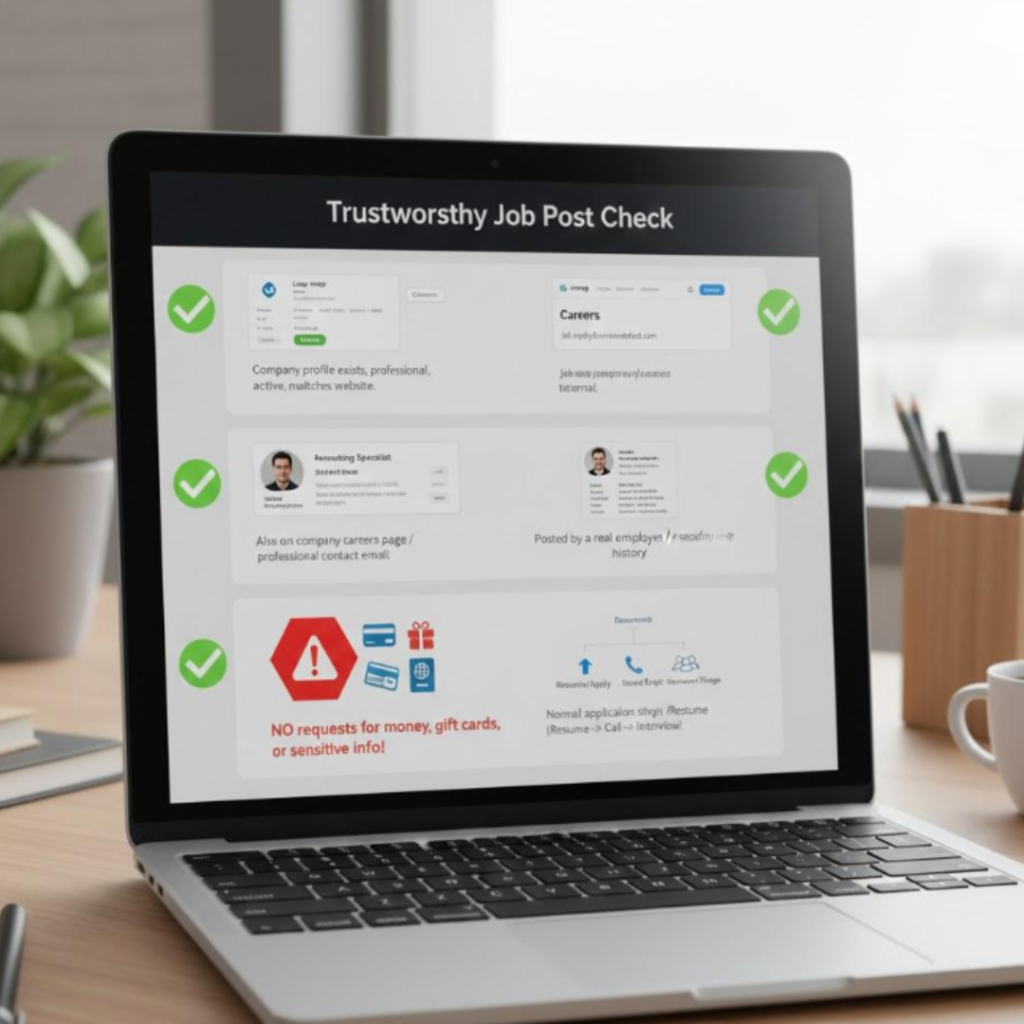
Authentic employers generally do not require candidates to pay recruitment fees, interview charges, security deposits, training costs, or equipment purchases before employment.
Understanding Avoiding Fake Job Listings Online includes recognizing that payment requests should raise immediate concern.
Professional recruitment emphasizes transparency.
Financial caution protects applicants.
Verifying Company Information
Before applying, job seekers should carefully review the organization’s official website, business details, contact information, and publicly available company profile.
Consistent information supports credibility.
Verification strengthens informed decision-making.
Checking Official Career Pages
Many reputable organizations publish employment opportunities directly through their official career websites.
Comparing advertisements with company announcements helps confirm authenticity.
Reliable sources improve confidence.
Official information supports safer applications.
Reviewing Email Addresses
Professional recruiters typically communicate using official company email domains rather than generic personal email services.
Unusual email addresses deserve closer examination.
Professional communication reflects organizational standards.
Attention to detail improves security.
Examining Job Descriptions
Authentic job advertisements usually include detailed responsibilities, required qualifications, application procedures, and organizational information.
Poor grammar, vague descriptions, or inconsistent details may indicate potential concerns.
Clear communication builds credibility.
Well-prepared advertisements reflect professionalism.
Protecting Personal Information
Job seekers should exercise caution before sharing highly sensitive personal information such as banking details, passwords, verification codes, or financial credentials.
Legitimate recruitment processes typically request only necessary application documents during appropriate hiring stages.
Understanding Avoiding Fake Job Listings Online involves protecting personal privacy throughout recruitment.
Responsible sharing improves digital safety.
Personal information deserves careful protection.
Researching Employer Reputation
Reading publicly available company information, employee experiences, professional reviews, and organizational history provides valuable insights into employer legitimacy.
Well-informed candidates make stronger decisions.
Research supports confident applications.
Social Media Verification
Many established organizations maintain active professional profiles across recognized business networking and social media platforms.
Consistent branding often supports organizational authenticity.
Professional visibility builds trust.
Verified communication improves confidence.
Recognizing Pressure Tactics
Fraudulent recruiters frequently encourage immediate decisions by claiming limited opportunities or urgent deadlines.
Legitimate employers generally provide candidates with reasonable time to complete application processes.
Thoughtful decisions reduce unnecessary risk.
Patience strengthens judgment.
Understanding Recruitment Processes
Professional hiring often includes application screening, interviews, assessments, reference verification, and formal offer documentation.
Employment without evaluation may indicate unusual circumstances requiring additional verification.
Structured recruitment promotes fairness.
Professional processes build credibility.
Interview Safety
Candidates should confirm interview locations, virtual meeting invitations, recruiter identities, and organizational contact details before attending interviews.
Safety remains important throughout recruitment.
Preparation improves confidence.
Verification protects applicants.
Secure Job Portals
Applying through recognized employment platforms and verified company websites generally improves recruitment safety compared with unknown sources.
Reliable platforms support responsible job searching.
Trusted resources strengthen security.
Careful choices improve outcomes.
Identity Protection
Personal identification documents should be shared only when genuinely required during verified recruitment stages.
Applicants should remain cautious about unnecessary requests for sensitive documentation.
Understanding Avoiding Fake Job Listings Online includes protecting identity throughout the hiring journey.
Responsible document sharing supports security.
Awareness reduces exposure.
Developing Critical Thinking
Evaluating every opportunity objectively helps job seekers distinguish between genuine employment and deceptive advertisements.
Emotional excitement should never replace careful analysis.
Balanced judgment improves decision-making.
Critical thinking protects careers.
Reporting Suspicious Listings
Many employment platforms provide reporting systems allowing users to identify potentially fraudulent advertisements.
Reporting suspicious content contributes toward safer online recruitment environments.
Community awareness strengthens digital safety.
Collective responsibility supports trust.
Building Safe Job Search Habits
Successful job seekers consistently verify employers, review company information, protect personal data, maintain organized application records, and remain informed about common recruitment scams.
Safe habits create long-term confidence.
Preparation strengthens professional success.
Why Awareness Matters
Employment scams affect individuals regardless of educational background or professional experience.
Increasing awareness helps reduce financial loss, emotional stress, identity theft, and wasted opportunities.
Understanding Avoiding Fake Job Listings Online empowers job seekers to pursue genuine opportunities with greater confidence.
Knowledge encourages informed decisions.
Prepared candidates navigate recruitment more safely.

Future of Safe Online Recruitment
Digital hiring will continue expanding through artificial intelligence, virtual interviews, remote recruitment, and online assessments.
Alongside these advancements, cybersecurity awareness and careful verification will remain essential components of successful job searching.
Technology creates opportunity and responsibility.
Prepared professionals adapt confidently.
Conclusion
Avoiding Fake Job Listings Online is an essential skill for every modern job seeker. While online recruitment has opened countless career opportunities, it has also increased exposure to fraudulent advertisements designed to deceive applicants. By verifying employers, researching company information, protecting personal data, recognizing warning signs, and following responsible application practices, individuals can significantly reduce recruitment-related risks.
Whether applying through Online Job Portals, Company Career Pages, Professional Networking Platforms, or Government Recruitment Websites, informed decision-making remains the strongest defense against employment scams.
Career success begins with genuine opportunities built upon trust, preparation, and careful evaluation. Developing safe online job search habits not only protects personal information and financial security but also ensures that time and effort are invested in authentic career opportunities. By staying informed, thinking critically, and verifying every opportunity, job seekers can confidently navigate today’s digital employment landscape while building a successful and secure professional future.